Subterranean termites and drywood termites inflict distinct types of damage across South Florida properties, demanding divergent treatment strategies rather than retail surface sprays. Subterranean species establish…
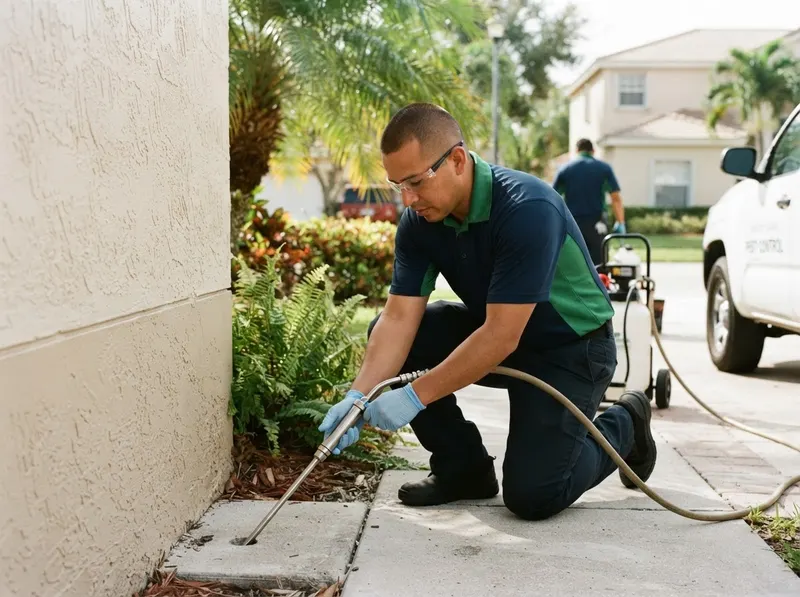
Subterranean termites and drywood termites inflict distinct types of damage across South Florida properties, demanding divergent treatment strategies rather than retail surface sprays. Subterranean species establish nests beneath ground level and tunnel upward through exploratory mud shelter tubes to feed on softwood cellulose within structural studs, drywall paper, and floor joists. Halting these ground-originating colonies requires an uninterrupted perimeter defense, utilizing EPA registered termiticides like non-repellent fipronil applied via continuous perimeter trenching or concrete sub-slab rod injection. In contrast, drywood termites form independent colonies entirely encased within seasoned lumber, window bucks, rafters, and fascia boards, requiring no soil contact. Eradicating drywood infestations relies on deep-gallery pressure micro-injections using expanding foam termiticides, localized direct-wood applications, or penetrating surface borate coatings that saturate the wood fibers according to guidelines outlined by the Florida Department of Agriculture and Consumer Services.
Selecting between targeted localized injections and whole-structure barrier work depends on the architectural layout, infestation severity, and physical location of insect evidence. Localized spot treatments fit single-gallery drywood discoveries where hexagonal fecal pellets (frass) drop from a single isolated window casing or door header, avoiding extensive disruptions. However, attempting localized topical spraying on extensive subterranean infestations leaves underground colonies untouched, allowing structural deterioration to persist unseen inside wall voids. For continuous defense, a subterranean barrier addresses the building perimeter, while uninfested structural framing benefits from sodium octaborate tetrahydrate treatments regulated under Florida Administrative Code 5E-14. Homeowners managing single-family concrete-block structures across West Hialeah, Mango Hill, and Palm Springs Estates frequently encounter subterranean mud tubes climbing exterior stucco footings, whereas mid-century wood-framed additions throughout Seminola, Villa Las Pailas, and Hialeah Acres reveal drywood swarmers following seasonal humidity spikes.
Subterranean termite treatments establish chemical boundary zones in the soil surrounding slab perimeters and utility penetrations. Technicians dig 6-inch by 6-inch trenches alongside exterior foundation walls, applying 4 gallons of finished non-repellent termiticide emulsion per 10 linear feet per foot of depth, adhering strictly to technical parameters established by the University of Florida IFAS Extension. When monolithic concrete patios or carports abut living areas, technicians drill 0.5-inch access holes spaced 12 inches apart through the slab to introduce liquid termiticide into the underlying sub-base before sealing each hole with hydraulic cement. This non-repellent chemistry ensures foraging worker termites traverse the barrier unknowingly, sharing the active compound through social grooming (trophallaxis) to eliminate the central colony subterranean nest structure.
Drywood termite management targets active feeding pockets inside exposed attic framing, subflooring, and architectural wood trim. Technicians verify colony extents using acoustic detectors or fiber-optic borescopes before drilling 0.125-inch access ports directly into active galleries. Pressurized aerosol foam termiticide fills the interior voids, coating the wood-destroying insects directly while leaving residual crystals to eliminate emerging nymphs. For broad preventive protection during renovations near the Country Club of Miami area and Hialeah Heights, structural timber receives topical sprays of disodium octaborate tetrahydrate, penetrating up to 0.75 inches into lumber to prevent re-infestation. All treatment protocols eliminate long-term auto-pay subscriptions by deploying definitive, targeted eradication cycles backed by clear technical reporting.
Every job gets a firm, written price after a free on-site visit.
For standards, safe disposal, and service guidance on pest control services in Hialeah, FL, useful references include U.S. EPA, ENERGY STAR, U.S. Dept. of Energy, Consumer.gov, U.S. Census Bureau, and Google Maps. General consumer and small-business resources are available from USA.gov, Better Business Bureau, FTC Consumer Advice, U.S. Small Business Administration, and Ready.gov.
Tell us about your subterranean and drywood termite treatments job in Hialeah and we'll send a clear, written quote, usually the same day.
 PrimeGuard Bug Control